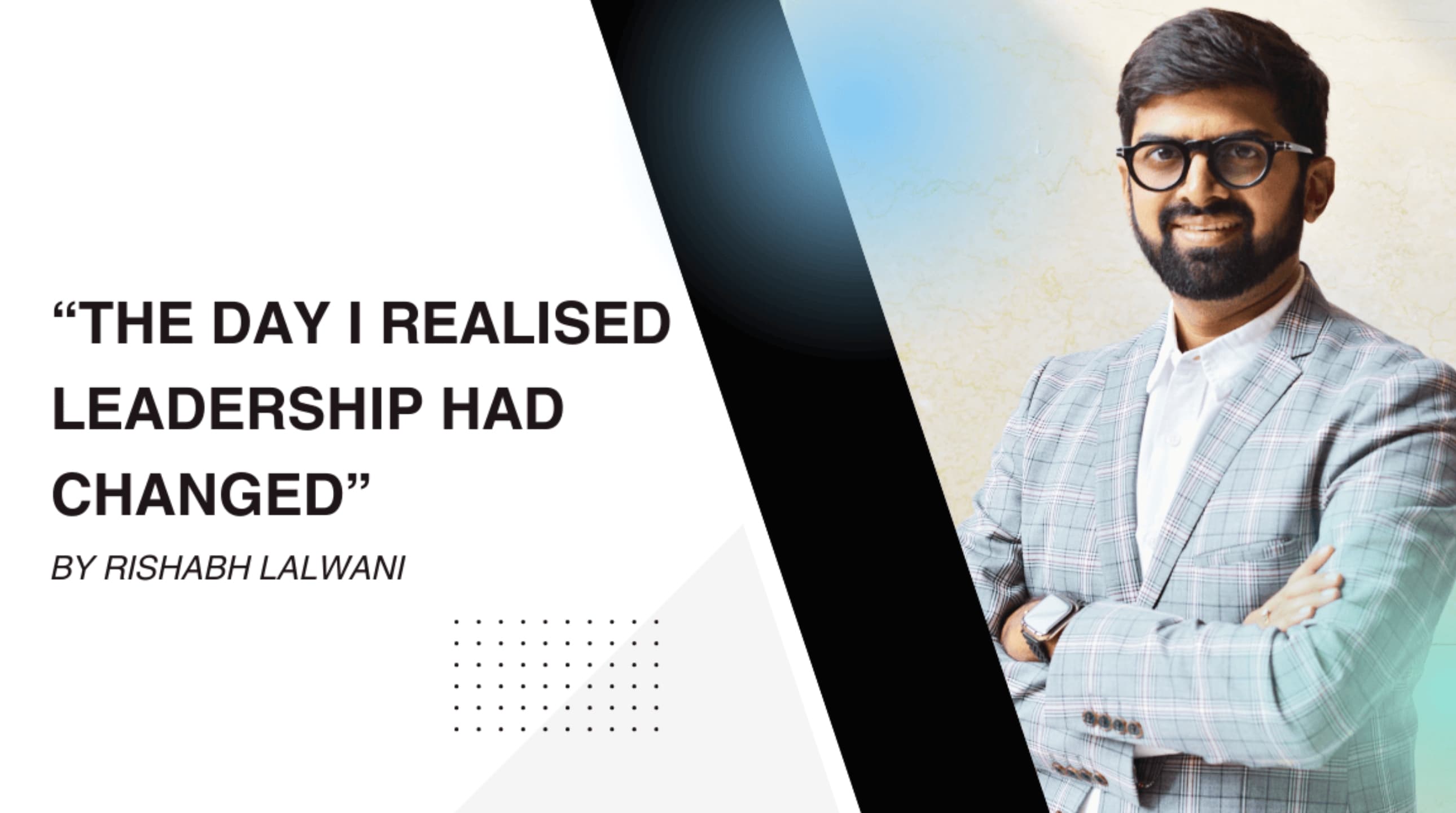
The Day I Realised Leadership Had Changed
Rishabh Lalwani
It happened at DiSHA 2026, in the middle of a busy afternoon, between two sessions, when the noise of conversations briefly softened, and someone stood quietly at our booth, waiting to speak.
He wasn’t there for a demo. He wasn’t curious about features. He wasn’t collecting brochures.
“He just wanted to talk.”
He said, “Last quarter, every report I had was positive. Every dashboard was green. Every manager said things were fine. Then, within two weeks, three major deliveries slipped, clients escalated, my board wanted explanations, and on top of that, my teams were exhausted. And I realised I had no clear answer to one simple question: when did this start going wrong?”
He looked at me and added, “I didn’t lose control. I lost visibility.”
That sentence stayed with me.
Because it explains modern leadership better than any management book ever could.
For years, leaders have been taught that good management is about staying informed. Attend reviews, read reports, track KPIs, hold meetings, follow processes and build governance.
Most leaders today do all of this. Religiously.
And yet, more organisations are struggling with delayed execution, hidden risks, and constant firefighting than ever before. Not because leaders are careless. Because the systems they rely on were built for a slower world.
They were designed to report what happened yesterday. Not to warn what will happen tomorrow. So leaders end up driving while looking in the rear-view mirror. Everything looks fine until suddenly it isn’t.
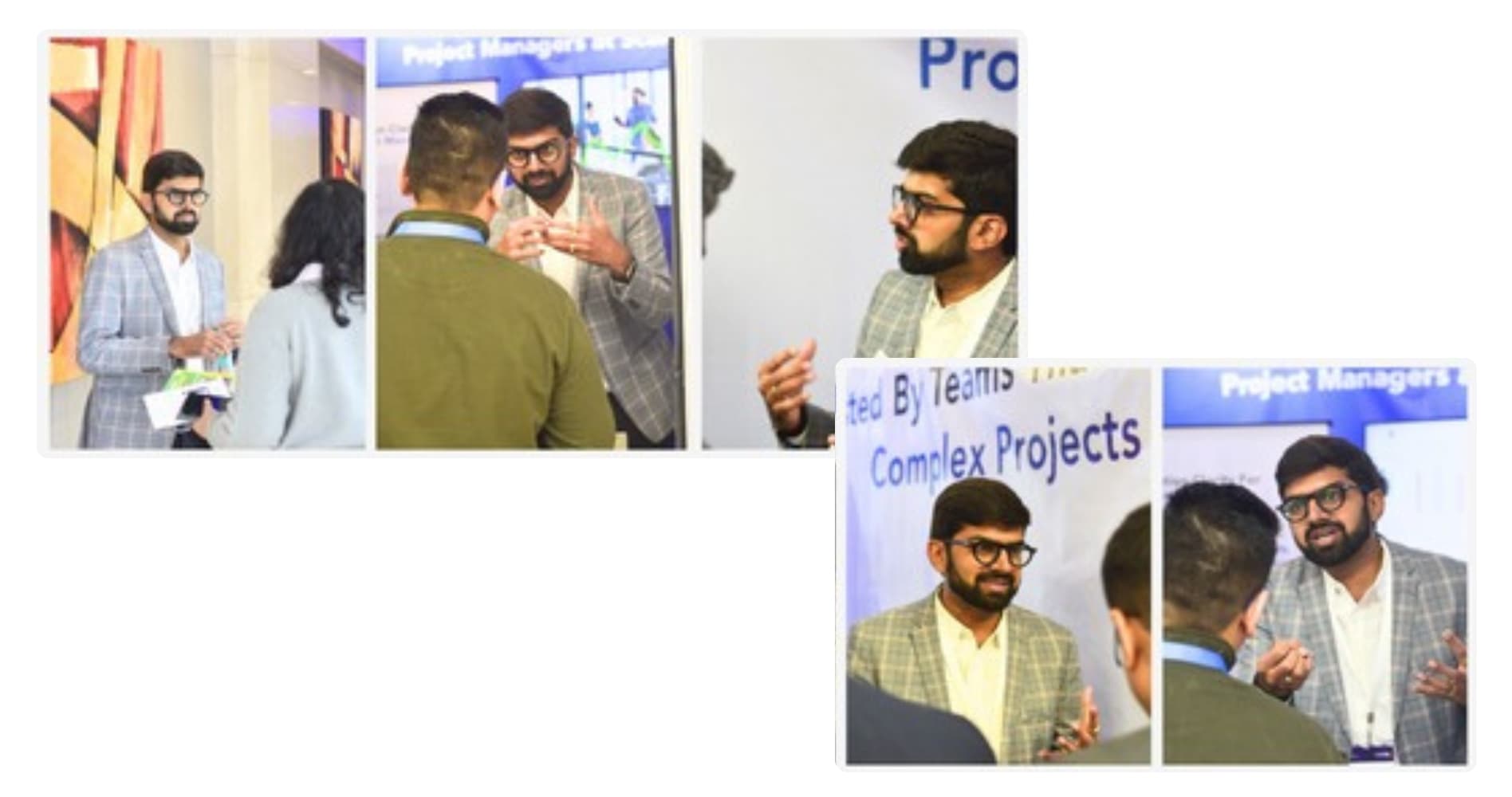
At DiSHA 2026, I stood on stage and looked out at a room full of experienced project leaders, delivery heads, and business managers. Many of them had been managing complex programs for years. Some had led global teams. Some had scaled startups. Some had survived multiple transformations.
And yet, before I even began speaking, I knew something important: almost everyone in that room was carrying the same silent frustration.
They were working harder than ever.
And still feeling late.
Late to risks.
Late to problems.
Late to difficult conversations.
Late to decisions that mattered.
That realisation shaped everything I shared that day.
During my session at DiSHA, there was a moment that captured this perfectly. I spoke about how “on track” has become the most dangerous phrase in project management. Not because it is wrong, but because it is overused. When everyone says “on track” by default, it stops being information and becomes a habit. It becomes a way of postponing uncomfortable conversations.
You could see people nodding. They had lived this.
Status meetings where nothing feels real. Reports that look perfect. Risks that appear only after damage is done.
“It is not dishonesty. It is delayed.” And delay is expensive.
This is where artificial intelligence enters the story, often misunderstood and often oversimplified.
AI is not here to replace leadership. It is here to remove blind spots.
Traditional systems depend on humans to notice problems and report them. AI systems observe patterns continuously. They notice when responses slow down. When dependencies stretch. When workloads pile up. When conversations become fragmented. When momentum weakens.
Long before anyone raises a red flag. It is the difference between hearing bad news and seeing it coming. One reacts, and the other prepares.
For most of my career, I believed that good leadership was about staying informed. If you attended the right meetings, reviewed the right reports, and tracked the right metrics, you could manage effectively. That belief was reinforced by every organisation I worked with. More dashboards meant more control. More tools meant better visibility. More meetings meant alignment.
“It sounded logical, but it was wrong.”
Over time, I began noticing a pattern. Projects were not failing because leaders lacked effort or intelligence. They were failing because leaders were discovering reality too late. By the time the dashboard turned red, the damage was already done. By the time an escalation happened, options were limited. By the time a risk was discussed openly, it had already become a cost.
“We were not managing execution. We were managing explanations.”
Later that day, a delivery head from a mid-sized technology company shared his experience with us. He told me that earlier, he spent most of his week chasing updates, calling people, following up, asking for clarifications, rechecking numbers and ,cross-verifying reports.
He said, “I thought that was leadership.”
Now, he sees execution health in real time. Not through more meetings. Through better signals. Through systems that connect scattered information into one coherent picture.
He smiled and said, “My calendar is lighter. My decisions are faster. My stress is lower. Nothing magical changed. I just stopped managing in the dark.”
That is the quiet transformation AI enables.
What became clear at DiSHA was that leadership is quietly splitting into two paths.
Some leaders are working harder every year. More meetings. More reviews. More pressure. More late nights. They carry the organisation on their shoulders, trying to compensate for weak systems with personal effort.
Other leaders are building intelligent foundations. They invest in visibility. They integrate tools. They trust signals. They intervene early. They design flow instead of chasing chaos.
“Same intelligence, same ambition, but different leverage.”
Teams feel this difference long before financial reports show it.
When leaders lack visibility, teams feel confused. Priorities keep shifting. Fire drills become normal. Stress becomes cultural. People stop trusting timelines.
When leaders have clarity, work feels stable. Decisions make sense. Pressure reduces. Ownership strengthens. Energy rises.
Several young managers told us at the event that what they want most is not more instructions, but fewer surprises. They want leaders who see problems forming, not exploding.
AI-enabled leadership makes that possible.
What DiSHA 2026 revealed most clearly is that this shift is already happening but quietly. Without headlines. Without slogans.
Leadership is moving away from supervision and toward orchestration. Away from checking and toward guiding. Away from reacting and toward designing systems that think alongside humans.
AI is becoming part of leadership infrastructure, like finance systems or communication platforms once were.
Not optional but Foundational.
The project leader who spoke to me in the morning returned in the evening.
He looked thoughtful.
He said, “I think I finally understand what went wrong. It wasn’t that my team failed. It was then that I found out too late.”
That is the real leadership risk of our time. Delayed awareness.
In a fast-moving world, knowing late is almost the same as not knowing at all.
We often say that leadership is about having answers.
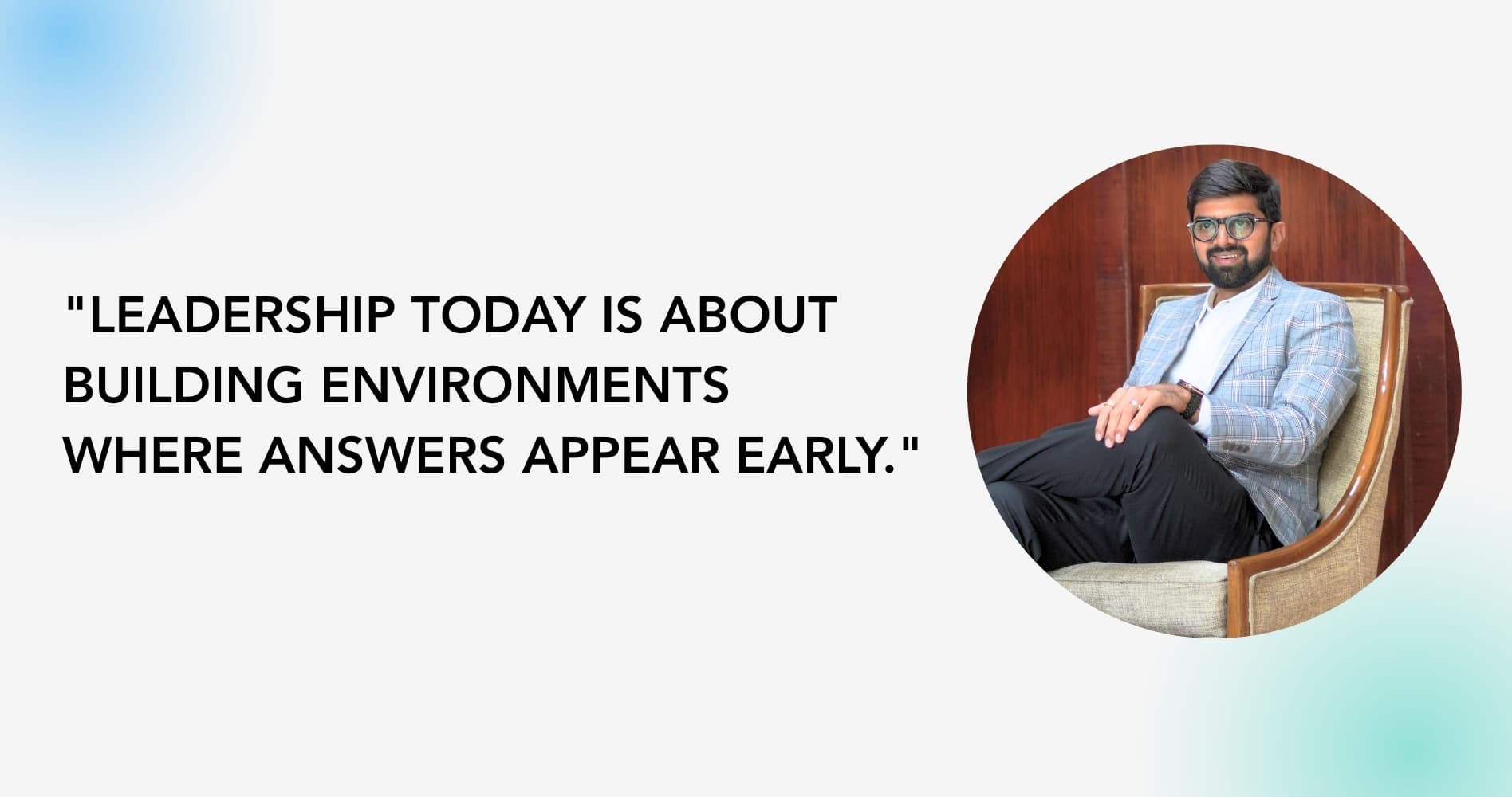
In the age of AI, leadership is about building environments where answers appear early.
Where signals are visible.
Where reality is shared.
Where decisions are timely.
Where “on track” actually means something again.
AI does not make leaders less important. It makes average leadership obsolete. The future belongs to leaders who combine human judgment with machine intelligence and turn complexity into clarity.
“Not someday, its Now.”
Download our Leadership Clarity Index report, just made for leaders like you.